

Navigating Investor Sentiment Amidst Tariffs and Stagflation Concerns
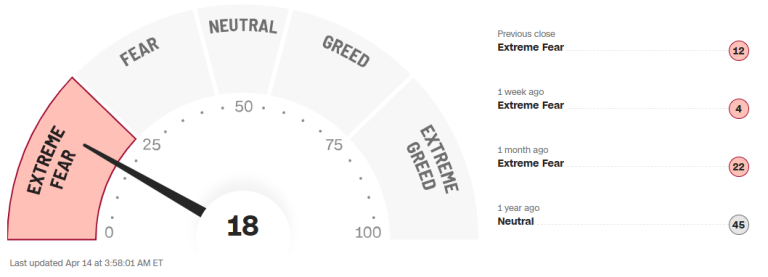
Investor sentiment is a powerful force that can drive market movements, often oscillating between fear and greed. As of April 3, 2025, the global financial landscape is marked by heightened volatility, primarily due to recent U.S. tariff implementations and growing concerns over stagflation—a combination of stagnant economic growth and persistent inflation. Understanding the current market sentiment and identifying potential opportunities is crucial for investors aiming to navigate these turbulent times.
Current Market Sentiment: A Climate of Caution
The introduction of new tariffs by the U.S. administration has significantly impacted investor confidence. The S&P 500 has declined by 7.7% since February 19, 2025, reflecting apprehension about the severity of these tariffs and their potential economic repercussions, including elevated inflation and recession risks.
In response to these developments, investors are exhibiting caution, seeking refuge in assets perceived as “tariff-proof.” Commodities, precious metals, defensive stocks, small-cap firms, utility companies, and real assets are gaining attention as protective measures against the uncertain economic environment.
Additionally, concerns about stagflation are influencing investment strategies. Recent policies, including tariffs and spending cuts, are expected to hamper U.S. economic growth while sustaining inflation. This scenario has led investors to consider assets like gold and bonds, which offer diversification and potential income amid high yields and expectations of Federal Reserve rate cuts.
Investment Opportunities Amidst Uncertainty
Navigating investment opportunities during times of uncertainty can be challenging—but it’s also when some of the best opportunities arise for those who plan strategically and stay informed.
Uncertainty—whether due to inflation, geopolitical conflict, interest rate changes, or market volatility—can feel unsettling. But as independent financial advisors, we encourage clients to view it not as a signal to panic, but as an opportunity to reassess, realign, and strategically invest.
Here are key strategies and opportunities suited to normal investors—people looking for balanced, goal-oriented investment approaches during uncertain times:
1. Stick to a Well-Diversified Portfolio
“Don’t put all your eggs in one basket” is more relevant than ever.
-
-
Mix of stocks, bonds, real estate, and cash equivalents.
-
Diversify across sectors (e.g., tech, healthcare, utilities) and geographies.
-
Rebalance regularly to maintain your risk profile.
-
Why? Diversification helps cushion against volatility in any one area.
2. Focus in Quality & Resilience
In uncertain markets, we prioritize financially strong companies with:
-
Low debt
-
Stable earnings
-
Strong cash flow
-
Long track records
These tend to outperform over the long term, especially during downturns.
3. Opportunistic Buying (Rand-Cost Averaging)
In volatile markets, every dip can be a long-term opportunity.
-
Stay invested and buy regularly, even during downturns.
-
Dollar-cost averaging helps reduce timing risk and builds discipline.
Tip: Use automatic investment plans into index or mutual funds.
4. Invest in Long-Term Structural Trends
Even in times of uncertainty, macro shifts continue:
-
Clean energy and infrastructure (benefiting from policy support)
-
Healthcare and aging population themes
-
Technology and automation (including AI)
For most investors, broad-based ETFs or unit trust funds in these themes are ideal.
5. Review Your Emergency Fund & Liquidity
Before taking on new investments, ask:
-
Do you have 3–6 months of expenses saved?
-
Can you access funds without penalties if needed?
Why? Uncertainty often brings unexpected personal financial needs too.
6. Stay Goal-Focused, Not Headline-Driven
The market will fluctuate. Your long-term plan shouldn’t.
-
Reaffirm your investment time horizon and risk tolerance.
-
Don’t react emotionally to short-term news.
-
Remember: Staying invested often outperforms trying to time the market.
Navigating the Fear and Greed Cycle
Investors must remain vigilant and adaptable, recognizing that market sentiment can shift rapidly. Employing strategies such as diversification, focusing on fundamentally strong assets, and maintaining a long-term perspective can help mitigate risks associated with the current climate of fear and greed.
Uncertainty is a constant in markets—what changes is how we prepare for and react to it. Staying diversified, focusing on quality and fundamentals, and keeping a long-term horizon are key to not just surviving but thriving during these periods.

